


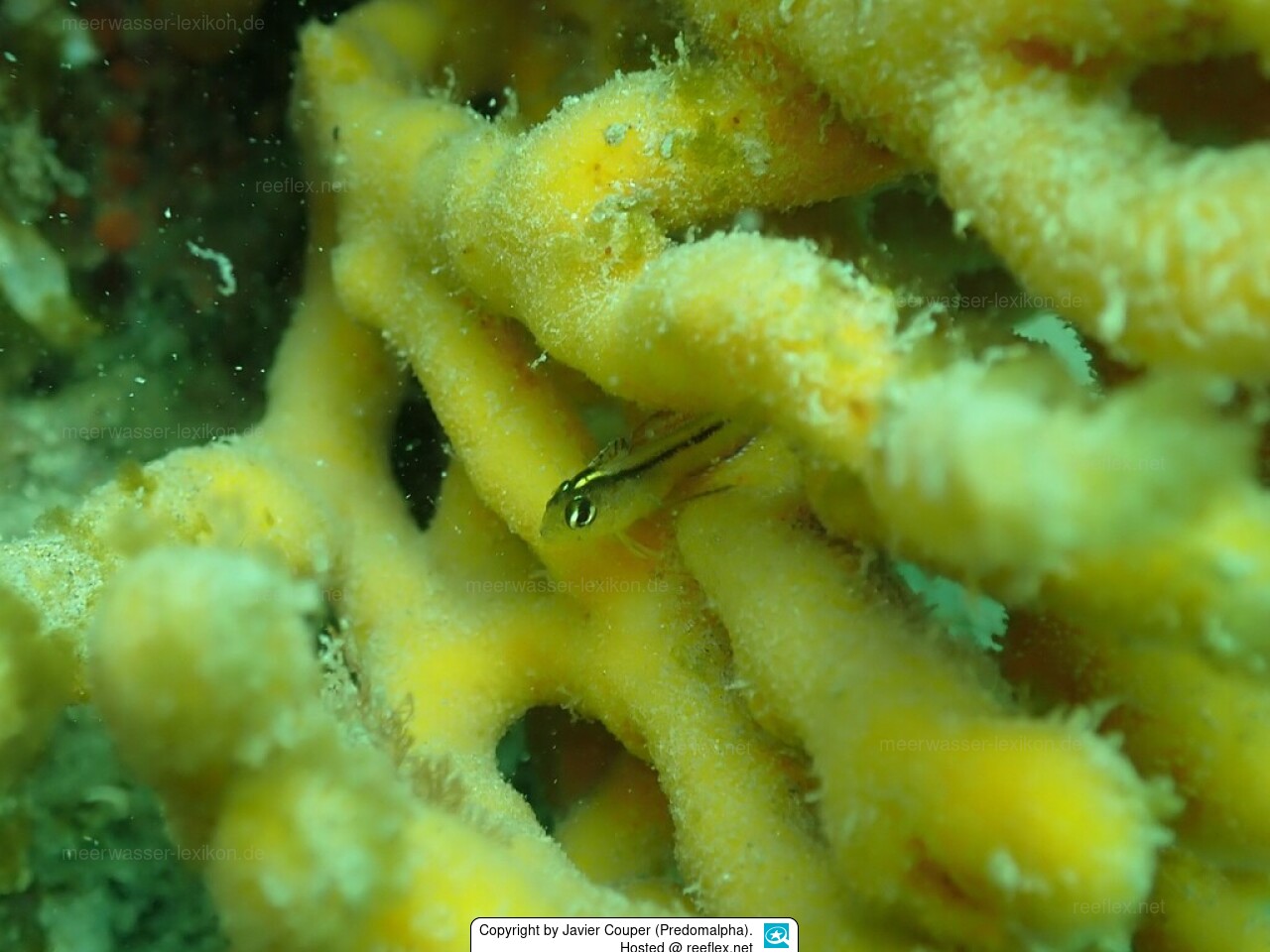
 Javier Couper (Predomalpha), New Zealand


Info
Hardy, 1989
Distribution: Southwest Pacific: throughout New Zealand. Records from Chatham Islands are unconfirmed.
Biology : Commonly found in intertidal rock pools, particularly those with adequate rocky or algal shelter.
Feeds mainly on amphipods, isopods, and polychaetes.
Jumping guard
A jumping guard prevents (nocturnal) fish from jumping out.
Wrasses, blennies, hawkfishs and gobies jump out of an unprotected tank in fright if their night rest is disturbed, unfortunately these jumpers are found dried up in the morning on carpets, glass edges or later behind the tank.
https://www.korallenriff.de/en/article/1925_5_Jump_Protection_Solutions_for_Fish_in_the_Aquarium__5_Net_Covers.html
A small night light also helps, as it provides the fish with a means of orientation in the dark!
Distribution: Southwest Pacific: throughout New Zealand. Records from Chatham Islands are unconfirmed.
Biology : Commonly found in intertidal rock pools, particularly those with adequate rocky or algal shelter.
Feeds mainly on amphipods, isopods, and polychaetes.
Jumping guard
A jumping guard prevents (nocturnal) fish from jumping out.
Wrasses, blennies, hawkfishs and gobies jump out of an unprotected tank in fright if their night rest is disturbed, unfortunately these jumpers are found dried up in the morning on carpets, glass edges or later behind the tank.
https://www.korallenriff.de/en/article/1925_5_Jump_Protection_Solutions_for_Fish_in_the_Aquarium__5_Net_Covers.html
A small night light also helps, as it provides the fish with a means of orientation in the dark!


