
Anzeige
Fauna Marin GmbH Mrutzek Meeresaquaristik Osci Motion Kölle Zoo Aquaristik BAS

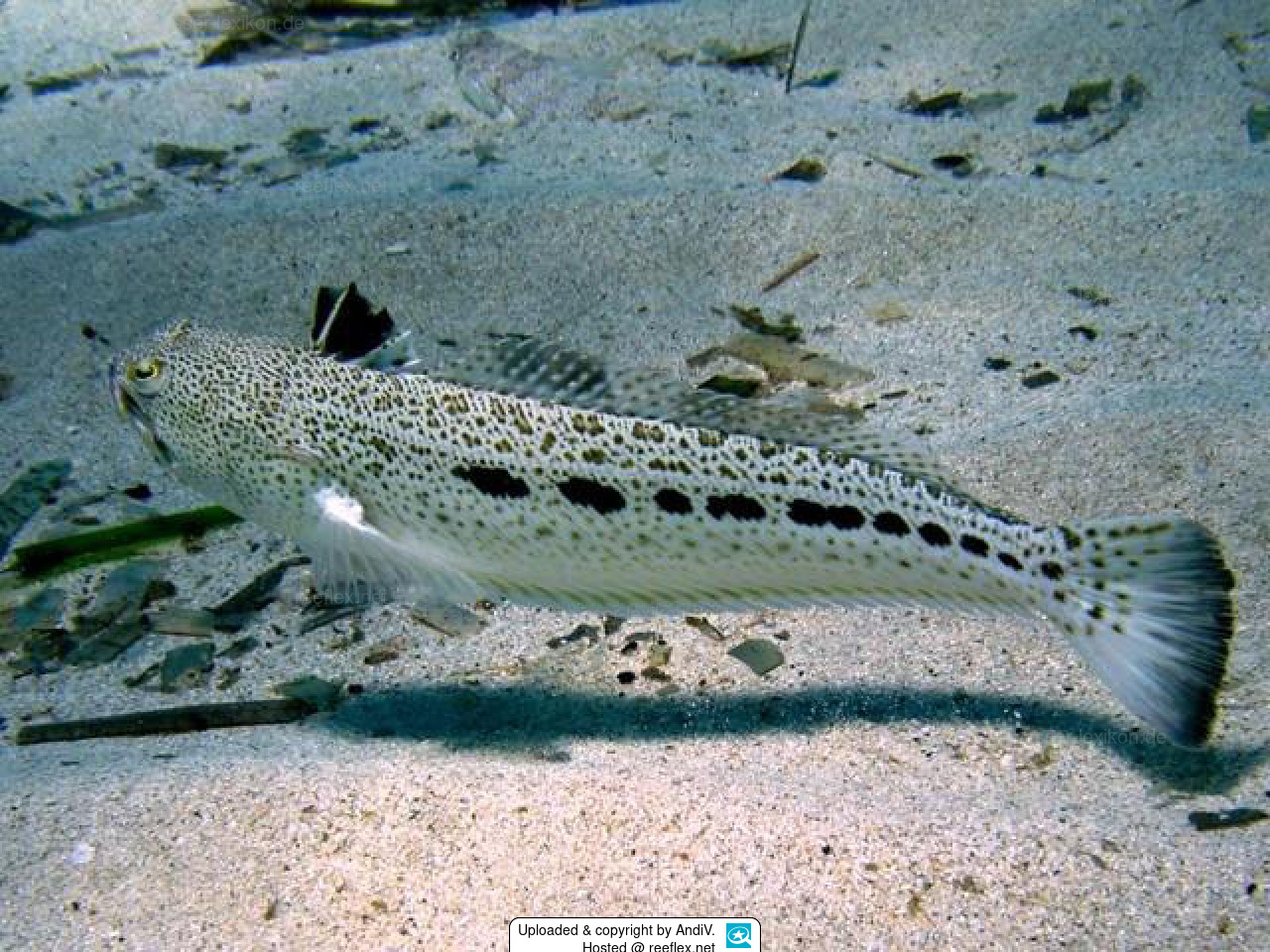
Trachinus araneus Spotted weever

Trachinus araneus is commonly referred to as Spotted weever. Difficulty in the aquarium: Wyłącznie dla ekspertów! Bardzo trudny w hodowli!. A aquarium size of at least 1000 Liter is recommended. Toxicity: Toxic.


Profilbild Urheber AndiV

copyright Roberto PiIlon, Italien


Uploaded by AndiV.

Image detail


Profile

lexID:
3835 
AphiaID:
127081 
Scientific:
Trachinus araneus 
German:
Spinnen-Petermännchen 
English:
Spotted Weever 
Category:
Ostroszowate 
Family tree:
Animalia (Kingdom) > Chordata (Phylum) > Actinopterygii (Class) > Perciformes (Order) > Trachinidae (Family) > Trachinus (Genus) > araneus (Species) 
Initial determination:
Cuvier, 1829 
Occurrence:
Algeria, Angola, France, Greece, Guinea-Bissau, Italy, Lebanon, Malta, Mauritania, Morocco, Portugal, Slovenia, Spain, Syrian Arab Republic, Turkey 
Sea depth:
1 - 100 Meter 
Size:
11.81" - 17.72" (30cm - 45cm) 
Temperature:
48.2 °F - 84.2 °F (9°C - 29°C) 
Food:
Crustaceans, Fish (little fishes) 
Tank:
219.98 gal (~ 1000L)  
Difficulty:
Wyłącznie dla ekspertów! Bardzo trudny w hodowli! 
Offspring:
Not available as offspring 
Toxicity:
Toxic 
CITES:
Not evaluated 
Red List:
Least concern (LC)  
Related species at
Catalog of Life
:
 
Author:
Publisher:
Meerwasser-Lexikon.de
Created:
Last edit:
2021-12-10 14:00:23 

Uwaga!


Trujący lub jadowity! Bardzo niebiezpieczny! Zachowaj ostrożność w obchodzeniu się z nim!

Info

The spotted weever, Trachinus araneus, is a fish of the Trachinidae family, Scorpaeniformes order, and Actinopterygii class.

It is up to 45 cm long, brown and yellow on the head and back, paler below with darker spots along the sides. The shape of its body is long and laterally flattened, the mouth almost is vertical in the head[1]. The front half of the first dorsal fin is black and consists of three spines which are highly poisonous, as are the backward facing spines on the extremities of the gill covers! It inhabitates at shallow waters to about 100m depth near rocks and sea grass nearby, burrowing in the bottom. Just as other weevers, it feeds on small fishes and crustaceans

External links

  1. FishBase (multi). Abgerufen am 07.08.2020.
  2. Invasive Species Compendium (en). Abgerufen am 07.08.2020.
  3. IUCN Red List of Threatened Species (multi). Abgerufen am 07.08.2020.
  4. World Register of Marine Species (WoRMS) (en). Abgerufen am 10.12.2021.

Pictures

Commonly


Husbandry know-how of owners

0 husbandary tips from our users available
Show all and discuss