


 Lin Chen


Info
Heteroconger cobra has small pectoral fins with 11 to 14 rays; the base of the dorsal fin is located in front of or slightly behind the gill opening.
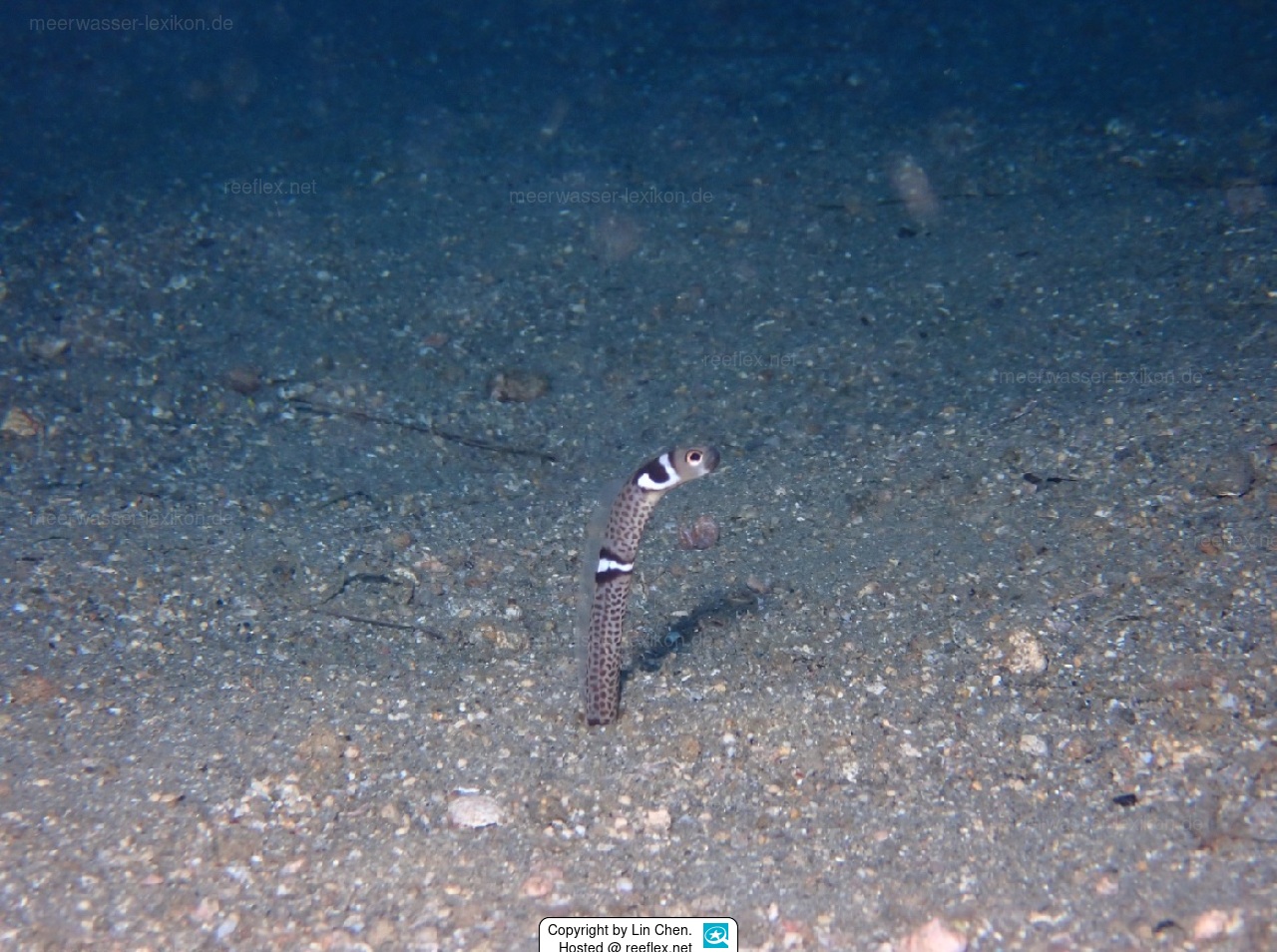
The tube eel has 198 to 204 vertebrae and a characteristic color pattern consisting of small brown spots on a light background behind the gill opening, a large, roughly U-shaped, blackish mark on the head that touches the gill opening, with a dark dorsal stripe in front of it and two similar U-shaped marks on the trunk.
Heteroconger cobra lives in colonies and prefers sloping sandy bottoms.
Etymology:
The species name “cobra” is derived from the colloquial name for the snake and alludes both to its color pattern and its posture in life.
Special thanks to Lin Chen, who took the photo near Tojo Una-Una, Sulawesi, Indonesia.
The tube eel has 198 to 204 vertebrae and a characteristic color pattern consisting of small brown spots on a light background behind the gill opening, a large, roughly U-shaped, blackish mark on the head that touches the gill opening, with a dark dorsal stripe in front of it and two similar U-shaped marks on the trunk.
Heteroconger cobra lives in colonies and prefers sloping sandy bottoms.
Etymology:
The species name “cobra” is derived from the colloquial name for the snake and alludes both to its color pattern and its posture in life.
Special thanks to Lin Chen, who took the photo near Tojo Una-Una, Sulawesi, Indonesia.

