


 Brian Gratwicke, USA


Info
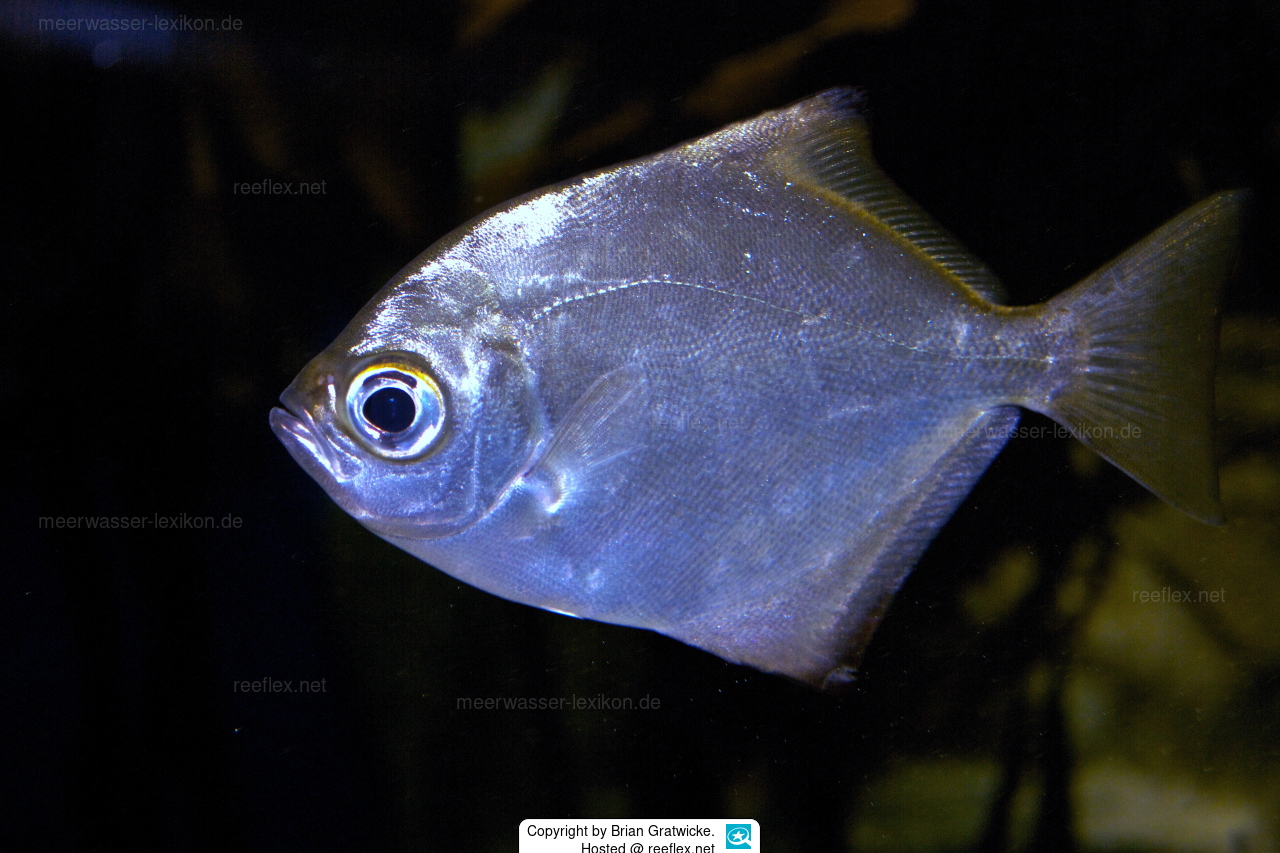
Monodactylus falciformis has a diamond-shaped body that is strongly compressed laterally.
The Cape flounder has a light silver color with a pearlescent sheen at the base of its dorsal and anal fins.
Its other fins are gray or translucent; the dorsal and anal fins have black tips.
Monodactylus falciformis occurs in large schools in sandy and rocky surf zones; juveniles migrate to
Monodactylus falciformis differs from the Natal flounder (Monodactylus argenteus), which has yellow dorsal and anal fins and whose juveniles have two dark stripes across the head.
Juveniles use estuaries and harbors as safe rearing grounds, typically in association with seagrass or algal beds.
Juveniles measuring 5–10 mm enter the estuaries and remain in these habitats until they reach sexual maturity, after which they return to the sea.
Juvenile fin-leafs display 11–12 narrow vertical stripes on their flanks.
In Madagascar, Monodactylus falciformis frequently enters tidal rivers and streams.
The Cape fin-leaf is a prized food fish, primarily caught locally using cast nets.
Nocturnal species needle-like teeth!
We do not recommend keeping them in aquariums, neither as juveniles in freshwater (they grow too large) nor in saltwater, as these fish only thrive in schools!
The Cape flounder has a light silver color with a pearlescent sheen at the base of its dorsal and anal fins.
Its other fins are gray or translucent; the dorsal and anal fins have black tips.
Monodactylus falciformis occurs in large schools in sandy and rocky surf zones; juveniles migrate to
Monodactylus falciformis differs from the Natal flounder (Monodactylus argenteus), which has yellow dorsal and anal fins and whose juveniles have two dark stripes across the head.
Juveniles use estuaries and harbors as safe rearing grounds, typically in association with seagrass or algal beds.
Juveniles measuring 5–10 mm enter the estuaries and remain in these habitats until they reach sexual maturity, after which they return to the sea.
Juvenile fin-leafs display 11–12 narrow vertical stripes on their flanks.
In Madagascar, Monodactylus falciformis frequently enters tidal rivers and streams.
The Cape fin-leaf is a prized food fish, primarily caught locally using cast nets.
Nocturnal species needle-like teeth!
We do not recommend keeping them in aquariums, neither as juveniles in freshwater (they grow too large) nor in saltwater, as these fish only thrive in schools!

