


 Solvin Zankl, Deutschland

Info
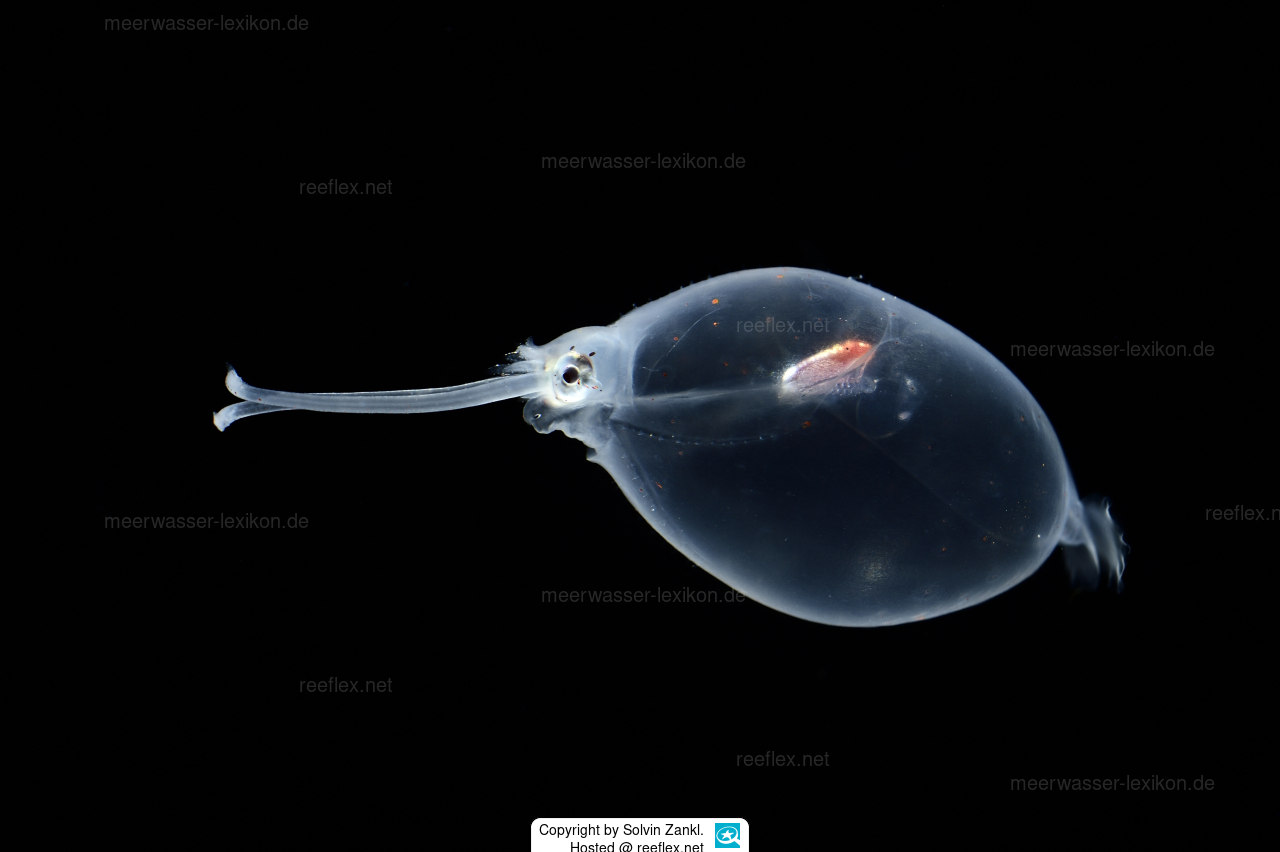
We would like to express our special thanks to Solvin Zankl, a biologist and nature photographer whose first-class and award-winning photos are regularly published in leading international magazines such as GEO, Stern, National Geographic, Natural History Magazine, and BBC Wildlife, for the first photo of the Gallerian squid Liocranchia reinhardtii.
https://www.zingst.de/fotografen/solvin-zankl, https://solvinzankl.com
The cute little squid is completely transparent, which has a double benefit for the squid; enemies have a hard time spotting it in water, and it can approach its prey almost undetected and then strike.
Deep dispersal:
Paralarvae and juveniles reside in epipelagic depth zones to the upper mesopelagic, while adults are found at lower epipelagic, mesopelagic, and bathypelagic depths.
Synonyms:
Fusocranchia alpha Joubin, 1920
Leachia reinhardti Steenstrup, 1856
Liocranchia brockii Pfeffer, 1884
Liocranchia elongata Issel, 1908
Liocranchia intermedia G. C. Robson, 1924
https://www.zingst.de/fotografen/solvin-zankl, https://solvinzankl.com
The cute little squid is completely transparent, which has a double benefit for the squid; enemies have a hard time spotting it in water, and it can approach its prey almost undetected and then strike.
Deep dispersal:
Paralarvae and juveniles reside in epipelagic depth zones to the upper mesopelagic, while adults are found at lower epipelagic, mesopelagic, and bathypelagic depths.
Synonyms:
Fusocranchia alpha Joubin, 1920
Leachia reinhardti Steenstrup, 1856
Liocranchia brockii Pfeffer, 1884
Liocranchia elongata Issel, 1908
Liocranchia intermedia G. C. Robson, 1924

