


 Admin Meerwasser-Lexikon


Info
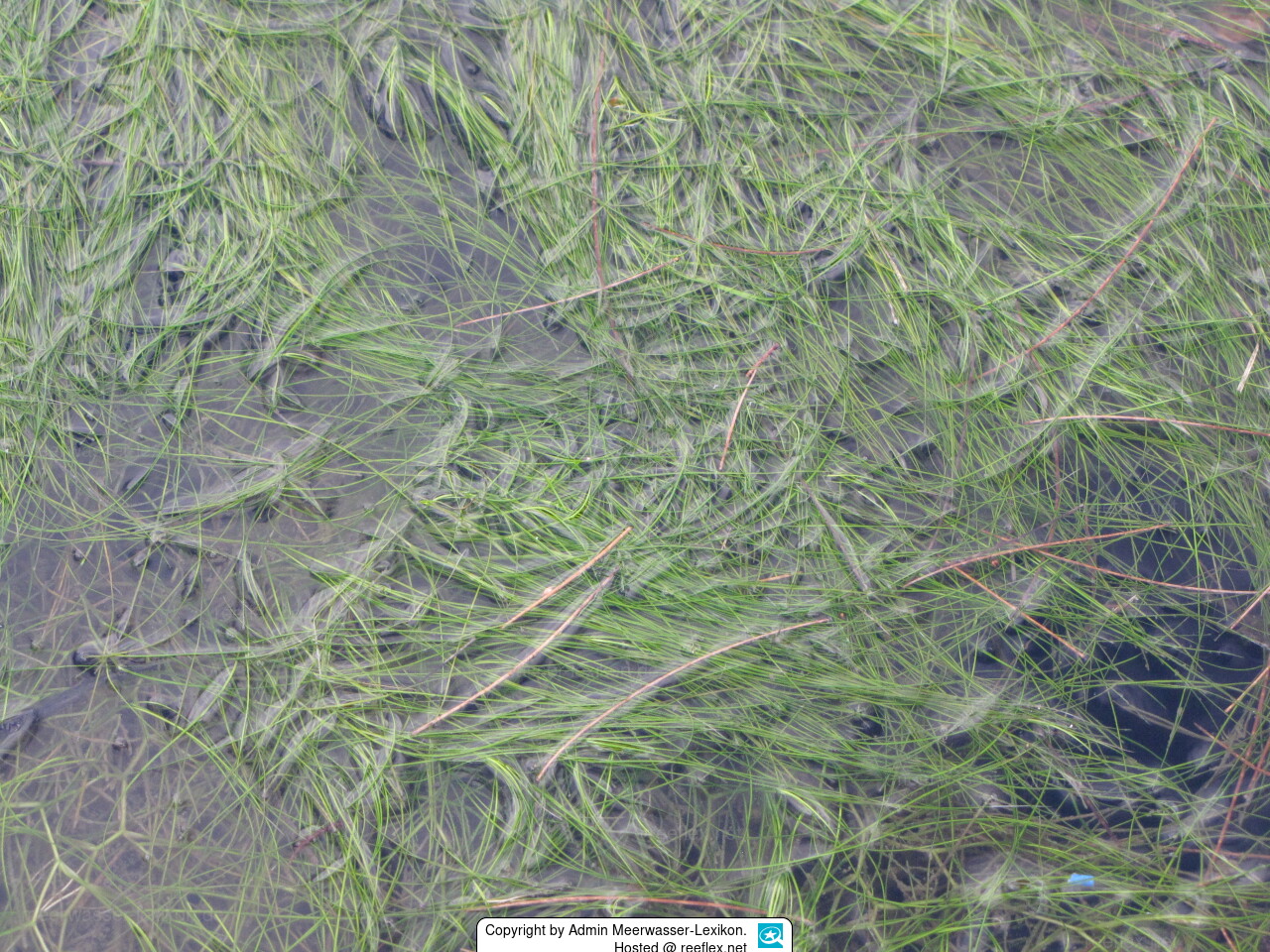
Ruppia maritima produces narrow green ribbon-shaped leaves and long, visually striking seed stalks in shallow water zones.
This seagrass occurs in very diverse environments in terms of temperature, pH, and salinity (hypo- and hypersaline conditions) and appears to be very tolerant of environmental conditions.
Ruppia maritima can survive at salinities ranging from 0 to 70 ppt, but may be affected by repeated changes in salinity.
This relatively small seagrass can form extensive monospecific meadows or grow mixed with Zostera marina.
Ruppia maritima occurs in canals, aquaculture ponds (traditional fish ponds), estuaries, tidal flats, and salt flats, i.e., fresh, brackish, and seawater.
It can even be found in coastal rice fields, in some cases this species can become a pest by clogging water pipes and canals.
It is found only in areas with low hydrodynamics.
General about seagrass meadows:
Seagrass beds are among the very most important marine biotopes for many reasons:
Seagrass beds are nurseries for many marine animals especially fishes
Seagrass beds play an important role in coastal protection, as their root network counteracts erosion and erosion of sediments on beaches and cliffs.
Seagrass beds are extremely efficient and effective carbon stores
Seagrass beds produce oxygen
Seagrass beds protect our oceans from acidification
Seagrass beds prevent pathogens such as vibrios from multiplying in the water
Seagrass beds feed manatees, dugongs and sea turtles
This seagrass occurs in very diverse environments in terms of temperature, pH, and salinity (hypo- and hypersaline conditions) and appears to be very tolerant of environmental conditions.
Ruppia maritima can survive at salinities ranging from 0 to 70 ppt, but may be affected by repeated changes in salinity.
This relatively small seagrass can form extensive monospecific meadows or grow mixed with Zostera marina.
Ruppia maritima occurs in canals, aquaculture ponds (traditional fish ponds), estuaries, tidal flats, and salt flats, i.e., fresh, brackish, and seawater.
It can even be found in coastal rice fields, in some cases this species can become a pest by clogging water pipes and canals.
It is found only in areas with low hydrodynamics.
General about seagrass meadows:
Seagrass beds are among the very most important marine biotopes for many reasons:
Seagrass beds are nurseries for many marine animals especially fishes
Seagrass beds play an important role in coastal protection, as their root network counteracts erosion and erosion of sediments on beaches and cliffs.
Seagrass beds are extremely efficient and effective carbon stores
Seagrass beds produce oxygen
Seagrass beds protect our oceans from acidification
Seagrass beds prevent pathogens such as vibrios from multiplying in the water
Seagrass beds feed manatees, dugongs and sea turtles

