BioTaucher


Info
Asthenosoma ijimai Yoshiwara, 1897
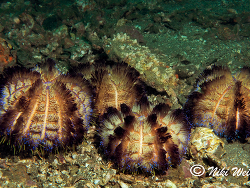
Asthenosoma ijimai is a species of sea urchin in the family Echinothuriidae. The sea urchin was first scientifically described by Yoshiwara in 1897.
The eggs of Asthenosoma ijimai (Yoshiwara) were fertilized in the laboratory and the development was followed up to the early juvenile stage by light microscopy. The orange and floating eggs are 1.2 mm in diameter and are by far the largest sea urchin eggs ever recorded. The embryos, larvae, and early juveniles are lecithotrophic and no exogenous food is required for development. Embryonic stages include a remarkable biscuit-shaped late blastula, never before described for a sea urchin. All stages up to the late larval stage swim just below the surface until sneezing at 20 °C during the third and fourth weeks. Metamorphosis from late larva to juvenile is gradual.
Highly toxic sea urchin, see also Asthenosoma varium.
Please do not touch!
In case of a sting, consult a doctor immediately.
As an immediate remedy hold the affected body part in warm water (as warm as possible).
Only something for special aquaria.
They accept substitute food quite well.
Asthenosoma ijimai is a species of sea urchin in the family Echinothuriidae. The sea urchin was first scientifically described by Yoshiwara in 1897.
The eggs of Asthenosoma ijimai (Yoshiwara) were fertilized in the laboratory and the development was followed up to the early juvenile stage by light microscopy. The orange and floating eggs are 1.2 mm in diameter and are by far the largest sea urchin eggs ever recorded. The embryos, larvae, and early juveniles are lecithotrophic and no exogenous food is required for development. Embryonic stages include a remarkable biscuit-shaped late blastula, never before described for a sea urchin. All stages up to the late larval stage swim just below the surface until sneezing at 20 °C during the third and fourth weeks. Metamorphosis from late larva to juvenile is gradual.
Highly toxic sea urchin, see also Asthenosoma varium.
Please do not touch!
In case of a sting, consult a doctor immediately.
As an immediate remedy hold the affected body part in warm water (as warm as possible).
Only something for special aquaria.
They accept substitute food quite well.