

 Dr. John Ernest (Jack) Randall (†), Hawaii


Info
Chaetodon auriga Forsskål, 1775
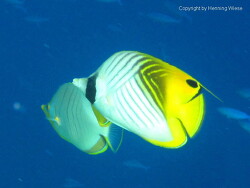
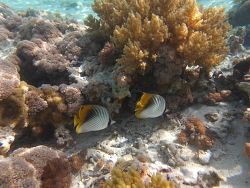
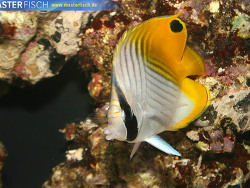
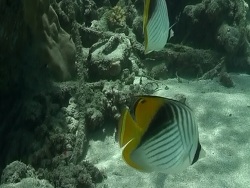
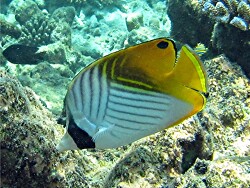
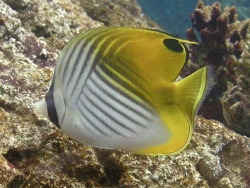
Chaetodon auriga , also known as the Auriga Butterflyfish ,Threadfin butterflyfish, Golden butterflyfish, Threadfin, Diagonal butterflyfish ; Inhabit the Tropical Indo-Pacific and Red Sea in back reef areas, lagoons and reef channels. They are found singly or in pairs in the reef shallows to depths of up to 10 metres (35 feet). The maximum size is around 20 cm (8 in.). Adult specimens have a long dorsal filament. Specimens from the Red Sea lack the ocellus on the soft dorsal fin and the dorsal filament is shorter. Young fish have a bright yellow dorsal area, which extends down across the caudal peduncle onto the soft portion of the anal fin.
Chaetodon auriga is an attractive and elegant addition to an aquarium display. The Auriga is one of the easier butterflyfish to keep. The aquarium should be having plenty of hiding places into which it can retire at night.
A good assortment of frozen foods in its diet and this fish will flourish. Chaetodon auriga will readily accept a wide array of foods. A varied diet with this particular fish is very important to retain it’s health. Frozen mysis shrimp, crustacean flesh, marine fish, flake and pellet, as well as prepared frozen preparations are fine.
Butterflyfish are not recommended for reefs as they will pick at or eat a wide variety of corals, fan worms, and other invertebrates. Most Butterflyfish are known to pick at Aiptaisia, a parasitic anemone.
If you like to keep more than two Auriga Butterflyfish or another Butterflyfish of similar coloration, we recommend you add them to your aquarium at the same time.
fishbase: Reports of ciguatera poisoning
Consuming this animal can trigger the dreaded Ciguatera fish poisoning.
The cause is to be found in certain unicellular organisms (dinoflagellates, such as Gambierdiscus toxicus), which produce toxins in the body of harmless and otherwise well-tolerated food fish, which can lead to various symptoms in humans:
Initial symptoms: Sweating, numbness and burning, especially around the mouth.
This is followed later by chills, dizziness, nausea, vomiting, diarrhoea, abdominal pain and muscle cramps. Paresthesia (itching, tingling, numbness) on the lips, the mucous membrane of the mouth and especially on the palms of the hands and soles of the feet, numbness in the hands, feet and face.
Paralysis of the skeletal muscles, including the respiratory muscles, dizziness and coordination disorders may occur. Muscle pain, joint pain, headache, toothache, shivering and sweating are further symptoms. A general feeling of weakness develops. Consumption of alcohol aggravates the symptoms.
Less common are life-threatening drops in blood pressure and palpitations (tachycardia) or the opposite. Overall, the condition is very rare, but it leads to death in about 7% of cases.
Attention: An antidote does not exist!
First aid:
As early as possible: Pump out the stomach, if vomiting does not occur by itself
Activated carbon (medical carbon) give to bind the toxins: dosage is 1 g / kg body weight.
Promote excretion: As an acute therapy, the attending physician can give an infusion of 20% mannitol (sugar alcohol). The mechanism of action is unclear. Mannitol promotes urine excretion, so this measure should only be taken after fluid and electrolytes have been supplemented to prevent a circulatory collapse.
Rehydration with fluid and electrolytes is a sensible measure anyway, especially after vomiting and diarrhoea.
In life-threatening situations, plasma expanders should be given, i.e. infusions that increase the volume of the blood and remain in the circulation for a long time.
Cardiovascular symptoms may require further medical intervention: Atropine can be given if the heartbeat slows down, dopamine if the blood pressure drops.
You can find more information here:
http://www.dr-bernhard-peter.de/Apotheke/seite116.htm
Synonymised names
Anisochaetodon auriga (Forsskål, 1775) · unaccepted
Chaetodon auriga setifier (Bloch, 1795) · unaccepted
Chaetodon lunaris Gronow, 1854 · unaccepted
Chaetodon satifer Bloch, 1795 · unaccepted (misspelling)
Chaetodon sebanus Cuvier, 1831 · unaccepted
Chaetodon setifer Bloch, 1795 · unaccepted
Linophora auriga (Forsskål, 1775) · unaccepted
Pomacanthus filamentosus Lacepède, 1802 · unaccepted
Pomacentrus setifer (Bloch, 1795) · unaccepted
Rabdophorus linophora auriga (Forsskål, 1775) · unaccepted (senior synonym)
Sarothrodus auriga (Forsskål, 1775) · unaccepted
Tetragonoptrus auriga (Forsskål, 1775) · unaccepted
Tetragonoptrus setifer (Bloch, 1795) · unaccepted
Direct children (1)
Subspecies Chaetodon auriga setifier (Bloch, 1795) accepted as Chaetodon auriga Forsskål, 1775
Chaetodon auriga , also known as the Auriga Butterflyfish ,Threadfin butterflyfish, Golden butterflyfish, Threadfin, Diagonal butterflyfish ; Inhabit the Tropical Indo-Pacific and Red Sea in back reef areas, lagoons and reef channels. They are found singly or in pairs in the reef shallows to depths of up to 10 metres (35 feet). The maximum size is around 20 cm (8 in.). Adult specimens have a long dorsal filament. Specimens from the Red Sea lack the ocellus on the soft dorsal fin and the dorsal filament is shorter. Young fish have a bright yellow dorsal area, which extends down across the caudal peduncle onto the soft portion of the anal fin.
Chaetodon auriga is an attractive and elegant addition to an aquarium display. The Auriga is one of the easier butterflyfish to keep. The aquarium should be having plenty of hiding places into which it can retire at night.
A good assortment of frozen foods in its diet and this fish will flourish. Chaetodon auriga will readily accept a wide array of foods. A varied diet with this particular fish is very important to retain it’s health. Frozen mysis shrimp, crustacean flesh, marine fish, flake and pellet, as well as prepared frozen preparations are fine.
Butterflyfish are not recommended for reefs as they will pick at or eat a wide variety of corals, fan worms, and other invertebrates. Most Butterflyfish are known to pick at Aiptaisia, a parasitic anemone.
If you like to keep more than two Auriga Butterflyfish or another Butterflyfish of similar coloration, we recommend you add them to your aquarium at the same time.
fishbase: Reports of ciguatera poisoning
Consuming this animal can trigger the dreaded Ciguatera fish poisoning.
The cause is to be found in certain unicellular organisms (dinoflagellates, such as Gambierdiscus toxicus), which produce toxins in the body of harmless and otherwise well-tolerated food fish, which can lead to various symptoms in humans:
Initial symptoms: Sweating, numbness and burning, especially around the mouth.
This is followed later by chills, dizziness, nausea, vomiting, diarrhoea, abdominal pain and muscle cramps. Paresthesia (itching, tingling, numbness) on the lips, the mucous membrane of the mouth and especially on the palms of the hands and soles of the feet, numbness in the hands, feet and face.
Paralysis of the skeletal muscles, including the respiratory muscles, dizziness and coordination disorders may occur. Muscle pain, joint pain, headache, toothache, shivering and sweating are further symptoms. A general feeling of weakness develops. Consumption of alcohol aggravates the symptoms.
Less common are life-threatening drops in blood pressure and palpitations (tachycardia) or the opposite. Overall, the condition is very rare, but it leads to death in about 7% of cases.
Attention: An antidote does not exist!
First aid:
As early as possible: Pump out the stomach, if vomiting does not occur by itself
Activated carbon (medical carbon) give to bind the toxins: dosage is 1 g / kg body weight.
Promote excretion: As an acute therapy, the attending physician can give an infusion of 20% mannitol (sugar alcohol). The mechanism of action is unclear. Mannitol promotes urine excretion, so this measure should only be taken after fluid and electrolytes have been supplemented to prevent a circulatory collapse.
Rehydration with fluid and electrolytes is a sensible measure anyway, especially after vomiting and diarrhoea.
In life-threatening situations, plasma expanders should be given, i.e. infusions that increase the volume of the blood and remain in the circulation for a long time.
Cardiovascular symptoms may require further medical intervention: Atropine can be given if the heartbeat slows down, dopamine if the blood pressure drops.
You can find more information here:
http://www.dr-bernhard-peter.de/Apotheke/seite116.htm
Synonymised names
Anisochaetodon auriga (Forsskål, 1775) · unaccepted
Chaetodon auriga setifier (Bloch, 1795) · unaccepted
Chaetodon lunaris Gronow, 1854 · unaccepted
Chaetodon satifer Bloch, 1795 · unaccepted (misspelling)
Chaetodon sebanus Cuvier, 1831 · unaccepted
Chaetodon setifer Bloch, 1795 · unaccepted
Linophora auriga (Forsskål, 1775) · unaccepted
Pomacanthus filamentosus Lacepède, 1802 · unaccepted
Pomacentrus setifer (Bloch, 1795) · unaccepted
Rabdophorus linophora auriga (Forsskål, 1775) · unaccepted (senior synonym)
Sarothrodus auriga (Forsskål, 1775) · unaccepted
Tetragonoptrus auriga (Forsskål, 1775) · unaccepted
Tetragonoptrus setifer (Bloch, 1795) · unaccepted
Direct children (1)
Subspecies Chaetodon auriga setifier (Bloch, 1795) accepted as Chaetodon auriga Forsskål, 1775